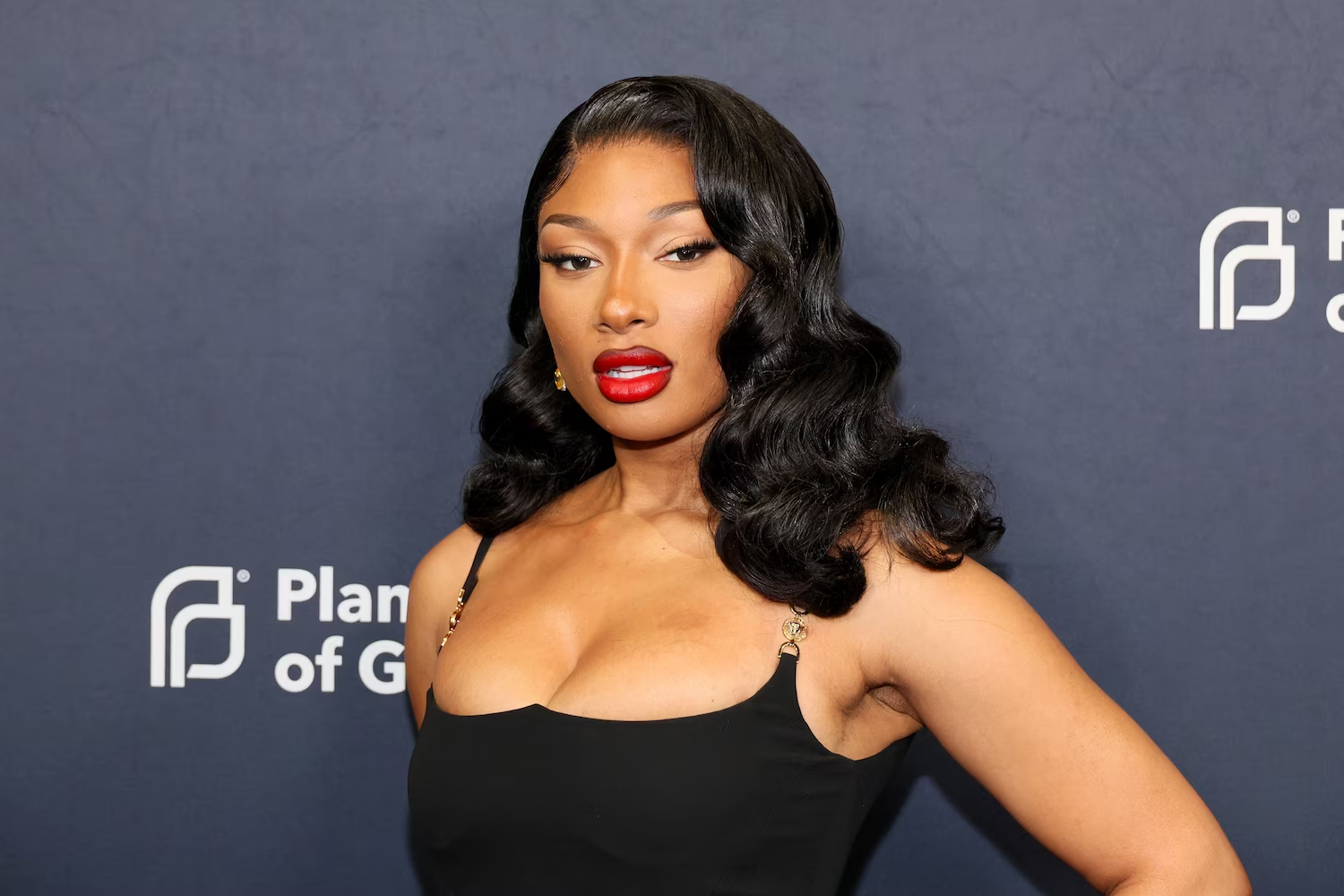
SOURCE: abcnews.go.com
A judge dismissed a jury’s verdict on Tuesday, holding social media commentator and blogger Milagro Cooper liable for defamation in a lawsuit filed by hip-hop star Megan Thee Stallion in October 2024.
Cooper was found liable for defamation, intentional infliction of emotional distress and promotion of an altered sexual depiction by a Miami jury on Monday, but Chief U.S. District Judge Cecilia Altonaga dismissed the defamation ruling because the plaintiff did not serve the media defendant with a legal notice before filing the suit, according to court documents obtained by ABC News.
“As a condition precedent to a defamation suit, section 770.01, Florida Statutes, requires a plaintiff to serve a media defendant with written notice specifying the alleged false or defamatory statements at least five days before filing a complaint,” Altonaga stated in her final judgment.
Megan Thee Stallion, whose legal name is Megan Pete, testified during the trial in November that Cooper, who is known on social media as blogger Milagro Gramz, participated in a targeted and coordinated social media campaign to harass, intimidate and defame her.
Pete alleged Cooper was a “paid surrogate” for rapper Tory Lanez and spread lies on his behalf. Lanez was convicted of shooting and injuring Pete in a July 2020 incident.
The judge decreased the damages Cooper owes Pete from $75,000 to $59,000, according to legal documents. Altonaga upheld the other two counts of intentional infliction of emotional distress and promotion of an altered sexual depiction.
“Cooper ultimately prevailed on Ms. Pete’s leading accusation, defamation, and the jury awarded a nominal amount of damages compared to millions of dollars Ms. Pete demanded from Ms. Cooper throughout the course of the litigation,” Cooper’s attorney said in a statement on Wednesday obtained by ABC News.
Pete’s attorneys said in a statement obtained by ABC News after the jury’s verdict on Monday that Cooper is also required to cover costs for the rapper’s legal bills.
“Request for costs and fees shall not be submitted until after any post-trial motions are decided or an appeal is concluded, whichever occurs later,” the judge stated in her final judgment.
The lawsuit alleges that Cooper spread lies about Pete to punish her and attempt to discredit her after she publicly named Lanez as her shooter.
“She’s created a space for a lot of people to come speak negatively about me,” Pete said in trial testimony last month of Cooper, referencing social media posts where the blogger attacked Pete’s character, casting her as a liar and mentally unstable.
Cooper, who took the stand earlier in November, testified that as a blogger, she discussed the shooting on her social media accounts without the influence of Tory Lanez, whose legal name is Daystar Peterson.
But Cooper did acknowledge that she spoke with Peterson and was hoping to have him as a guest on her channel. She also testified that she received payments from Peterson’s father, Sonstar Peterson, but claimed they were for “personal” reasons like her children’s birthdays and “promotional” work.
The jury was shown social media posts in which Cooper claimed that Pete was not shot.
When asked if she believed that Pete was shot, Cooper said, “I can’t say she lied about that because I wasn’t there,” but then Cooper said that she believed that Pete was not shot and had stepped on glass — a claim that Pete made in her initial statement to police.
Peterson is not named as a defendant in Pete’s defamation lawsuit but was asked to give a deposition ahead of the trial.
Peterson, who chose not to take the witness stand during the 2022 trial, pleaded not guilty and his defense attorneys argued during the trial that he was not the shooter.
Peterson was sentenced to 10 years in prison without the possibility of parole on Aug. 8, 2023, after he was convicted in December 2022 of felony assault for shooting and injuring Pete in both of her feet in an incident that occurred in the Hollywood Hills on July 12, 2020.
His legal team appealed his conviction, but it was upheld on Nov. 12 by a federal court in Los Angeles.